 ×
×

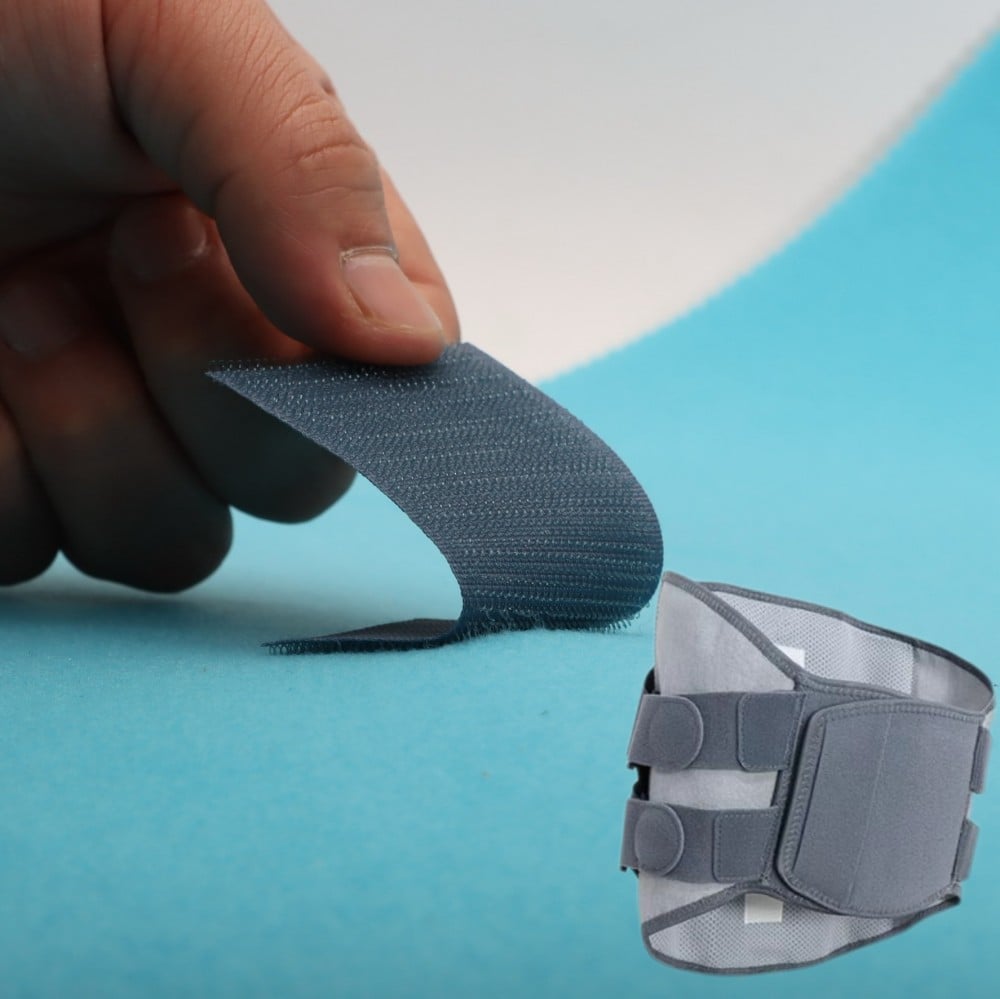
Braces and Wearable Support Products Knee braces, waist supports, wrist supports, ankle supports, and rehabilitation products usually require materials that are soft, flexible, and able to fit body curves. For these products, soft brushed Loop Fabri...
Braces and Wearable Support Products
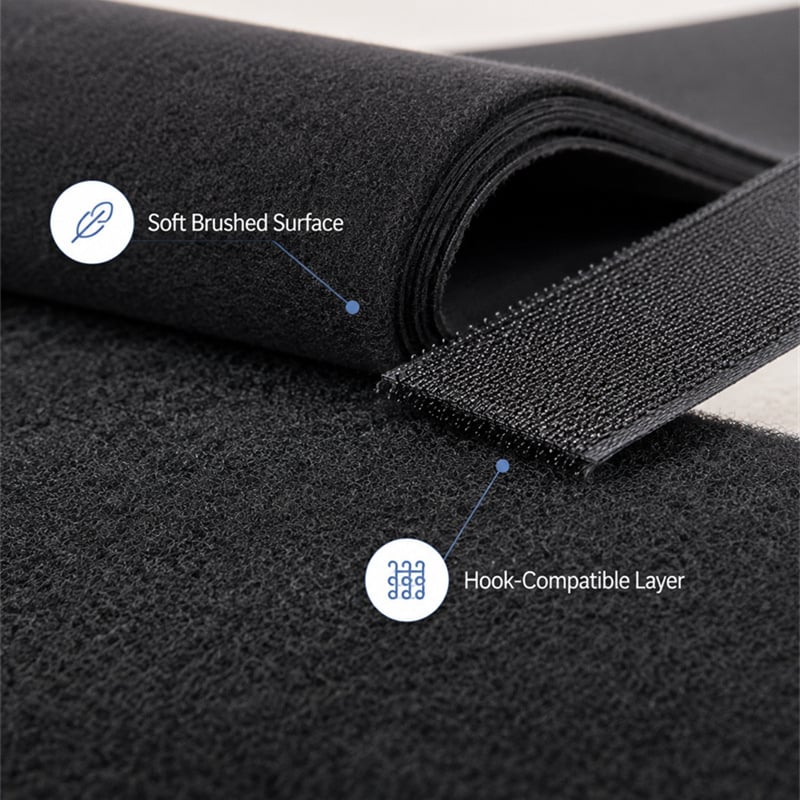
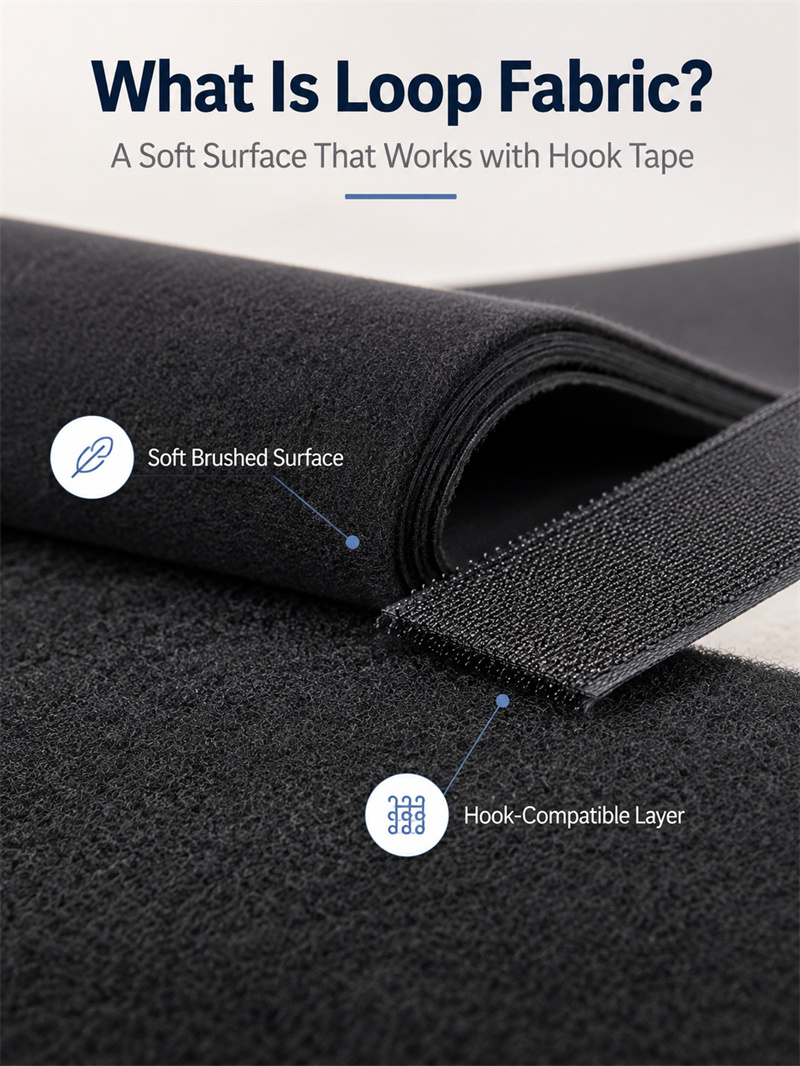
Knee braces, waist supports, wrist supports, ankle supports, and rehabilitation products usually require materials that are soft, flexible, and able to fit body curves.
For these products, soft brushed Loop Fabric can be laminated with PU foam, SBR neoprene, knitted fabric, or elastic backing fabric.
The surface layer helps with adjustment and fastening. The middle layer provides cushioning, thickness, and support.
When these layers work well together, the product feels more natural and less stiff during use.
Adjustable Straps and Fixing Structures
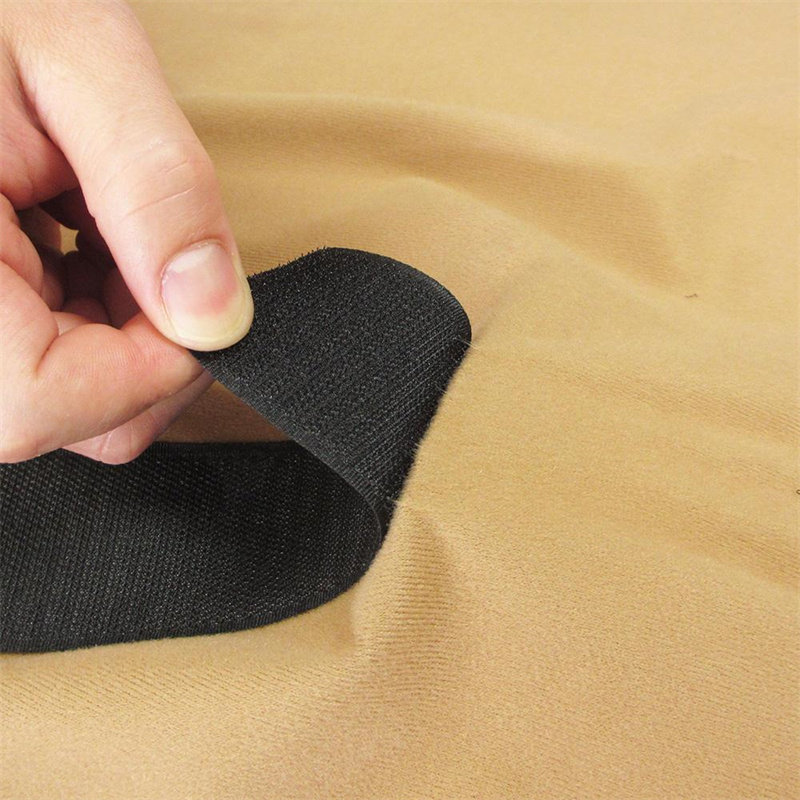
Shoulder straps, waist straps, sports bands, and wearable device straps usually need a wider adjustment range and repeated opening and closing.
Wide-width Loop Fabric can provide a larger area for hook tape attachment. It is also easier to cut, die-cut, sew, and convert into different strap structures.
For products that need to fit different sizes or positions, this type of structure gives the design more flexibility.
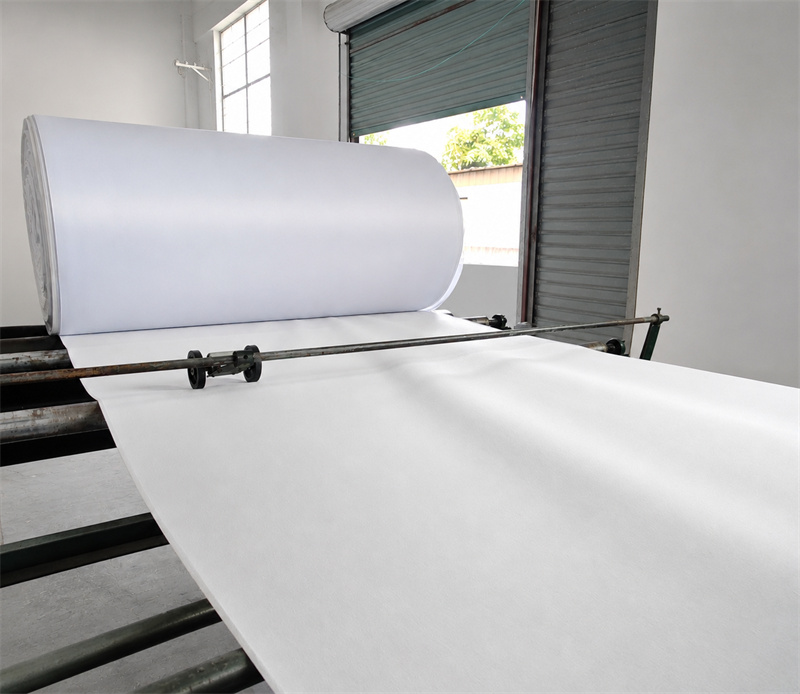
Bags, Storage, and Cushioning Parts
Camera bag dividers, tool bag linings, backpack shoulder straps, laptop bag padding, and removable panels usually require cushioning, stability, and easy processing.
Suitable structures may include:
Loop Fabric + PU Foam
Loop Fabric + Foam + Backing Fabric
Loop Fabric + Air Mesh
Foam can add thickness and protection. Backing fabric or mesh can improve appearance, support, and overall structure.
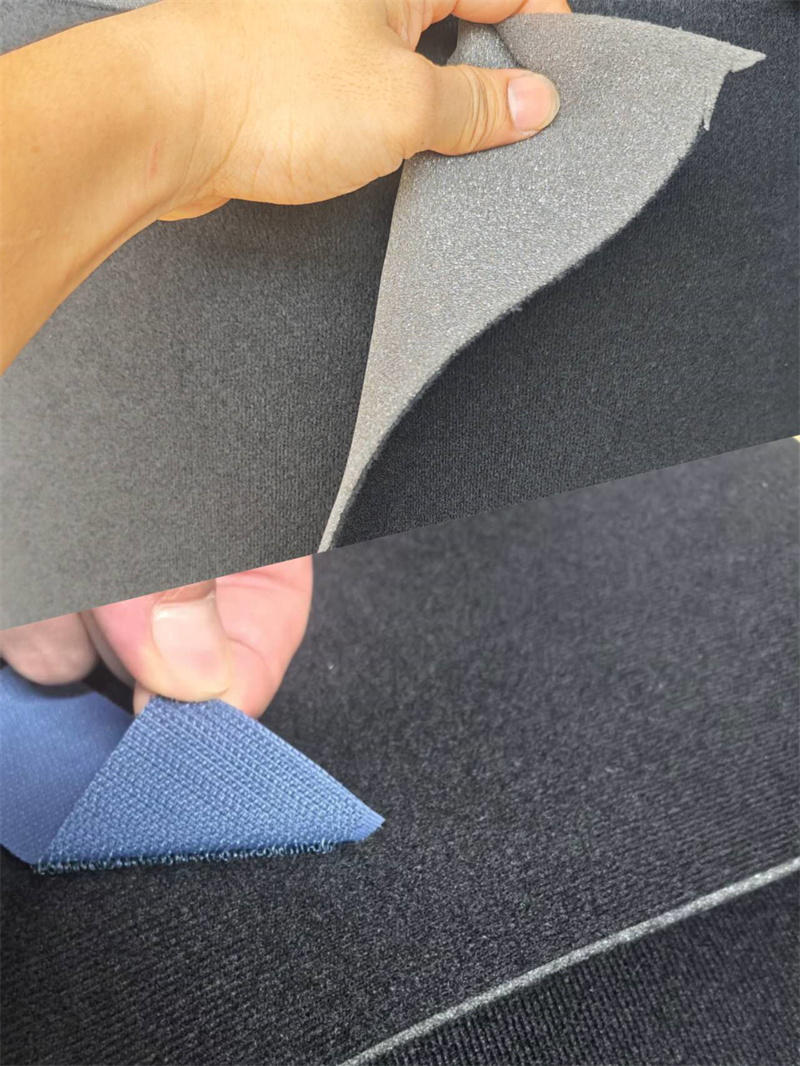
Common Laminated Loop Fabric Structures
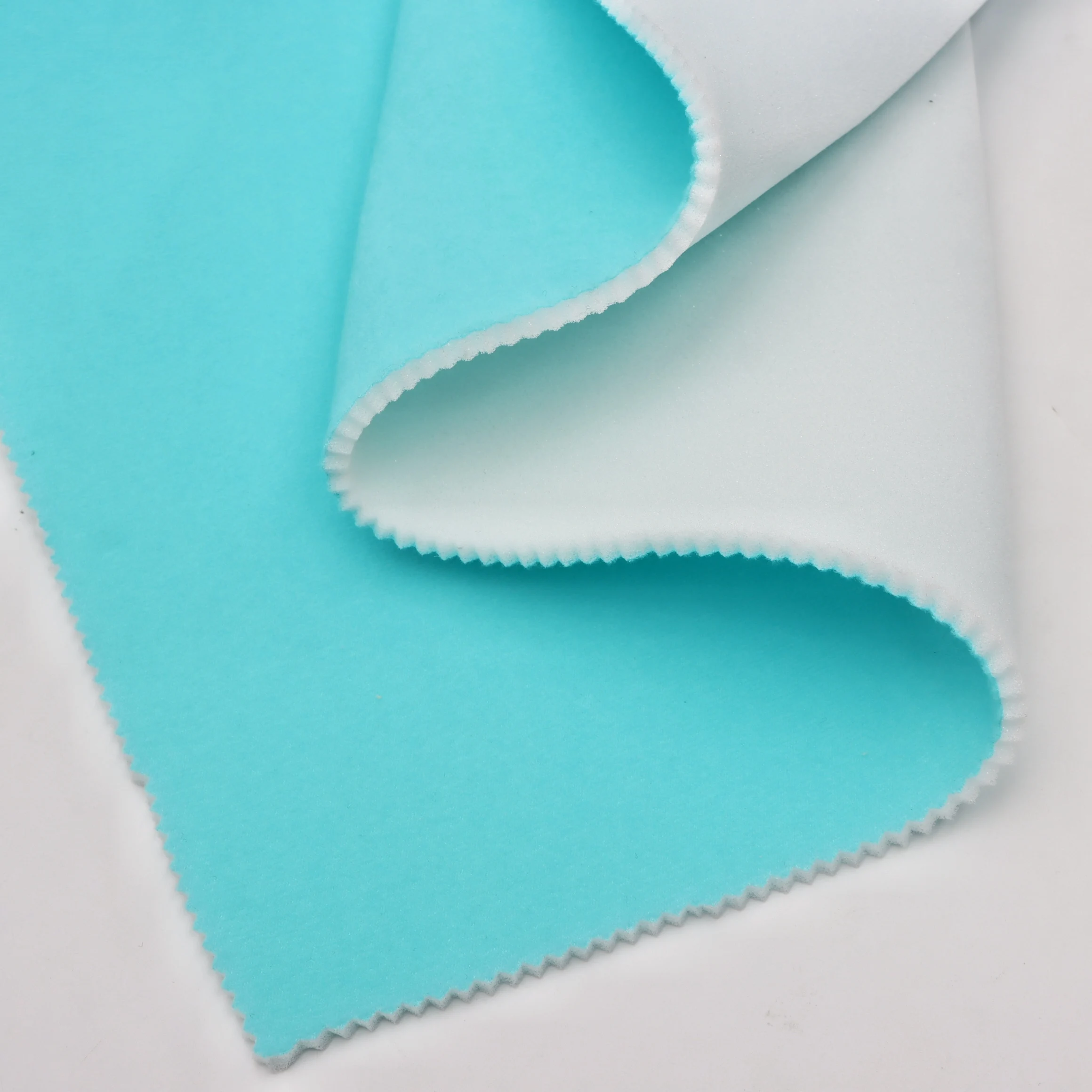
Loop Fabric can be used alone or laminated with other materials to improve softness, thickness, cushioning, elasticity, or support.
Different laminated structures solve different product needs.
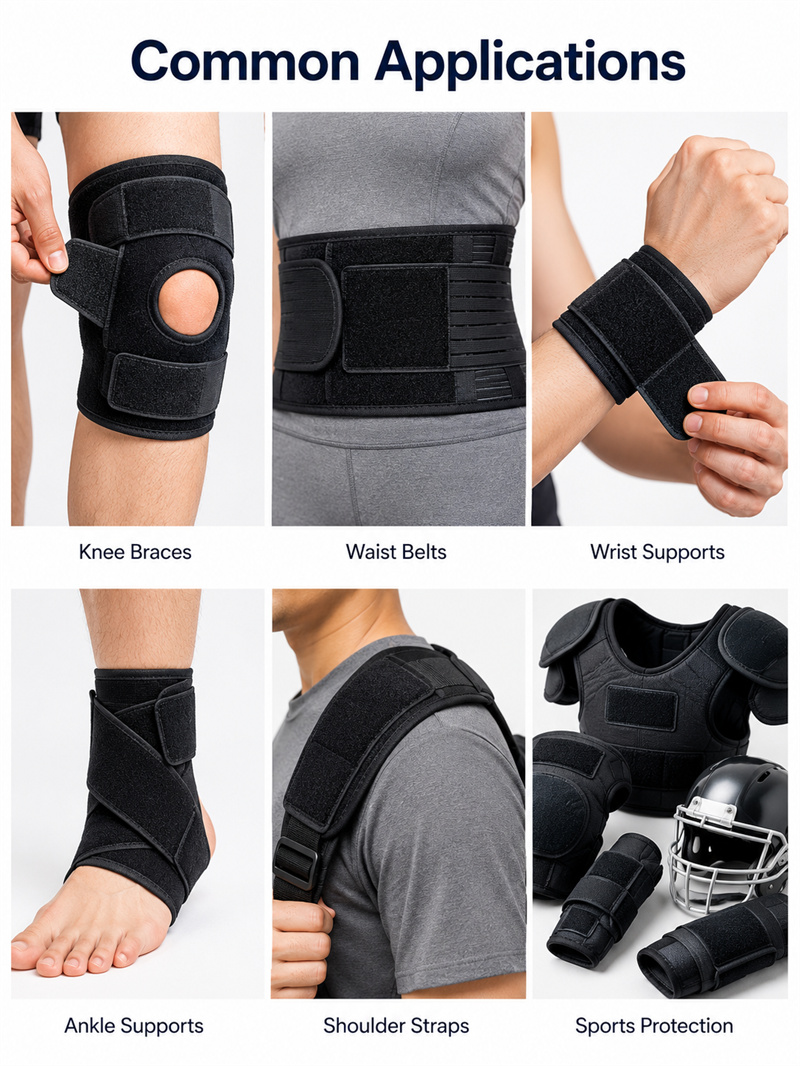
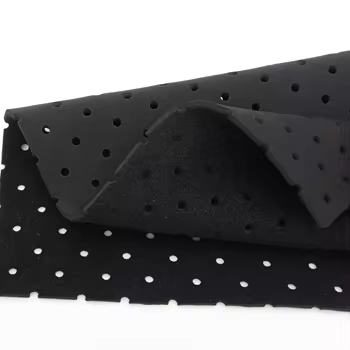
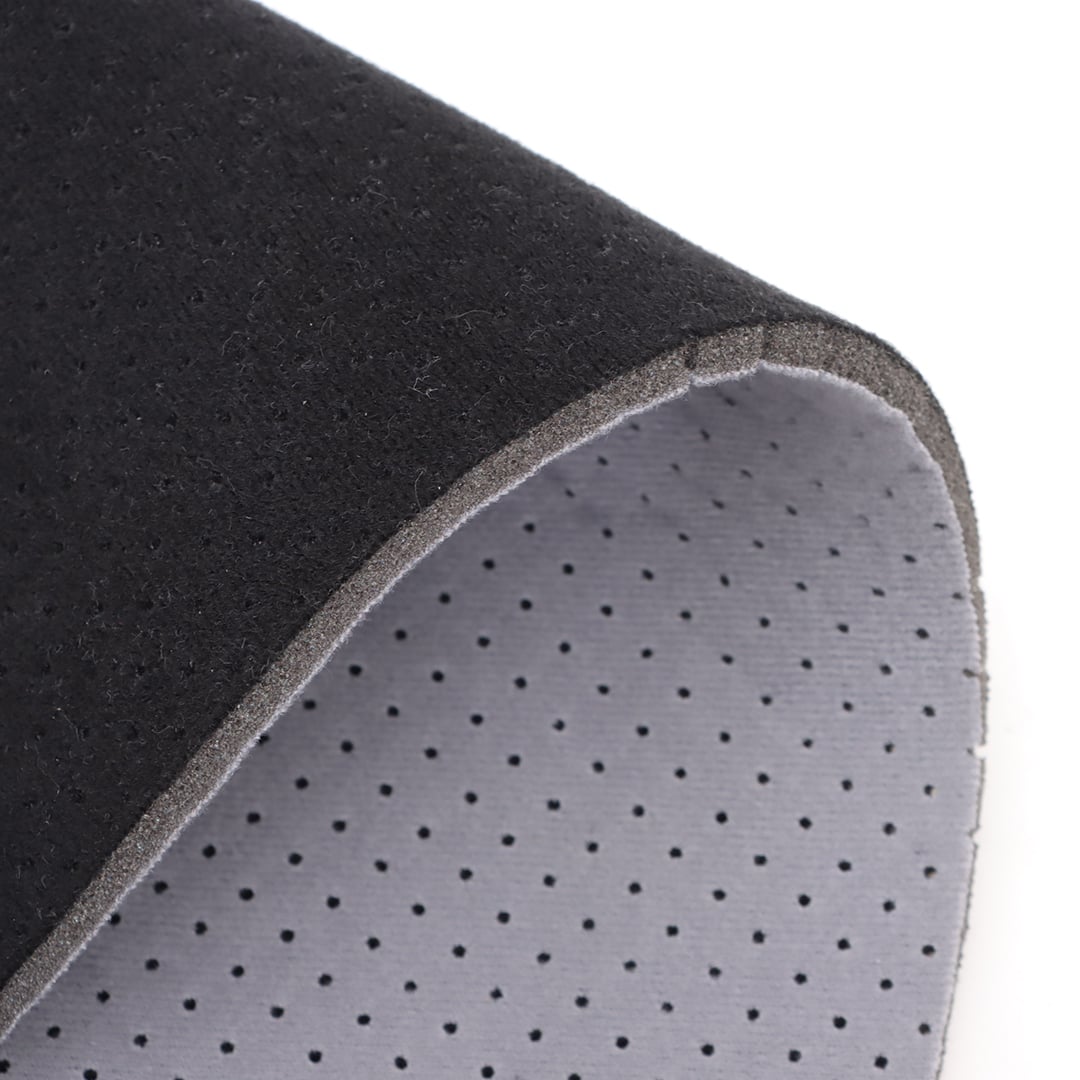
Loop Fabric + PU Foam
PU foam can add softness, thickness, and lightweight cushioning while keeping the material flexible.
This structure is suitable for:
Soft straps
Protective padding
Bag components
Lightweight support products
Seat and back cushions
Wearable products
Foam thickness and density can be adjusted according to the final product requirements.
Need a softer feel? Need more support? The middle foam layer can make a big difference.
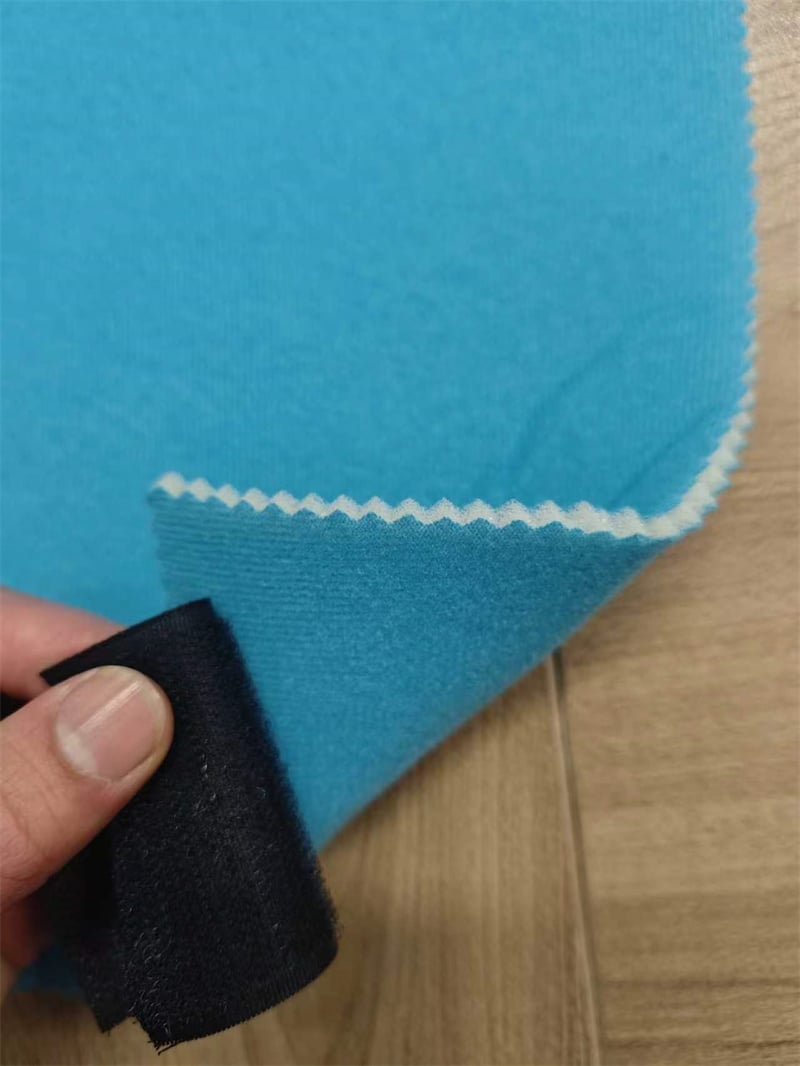
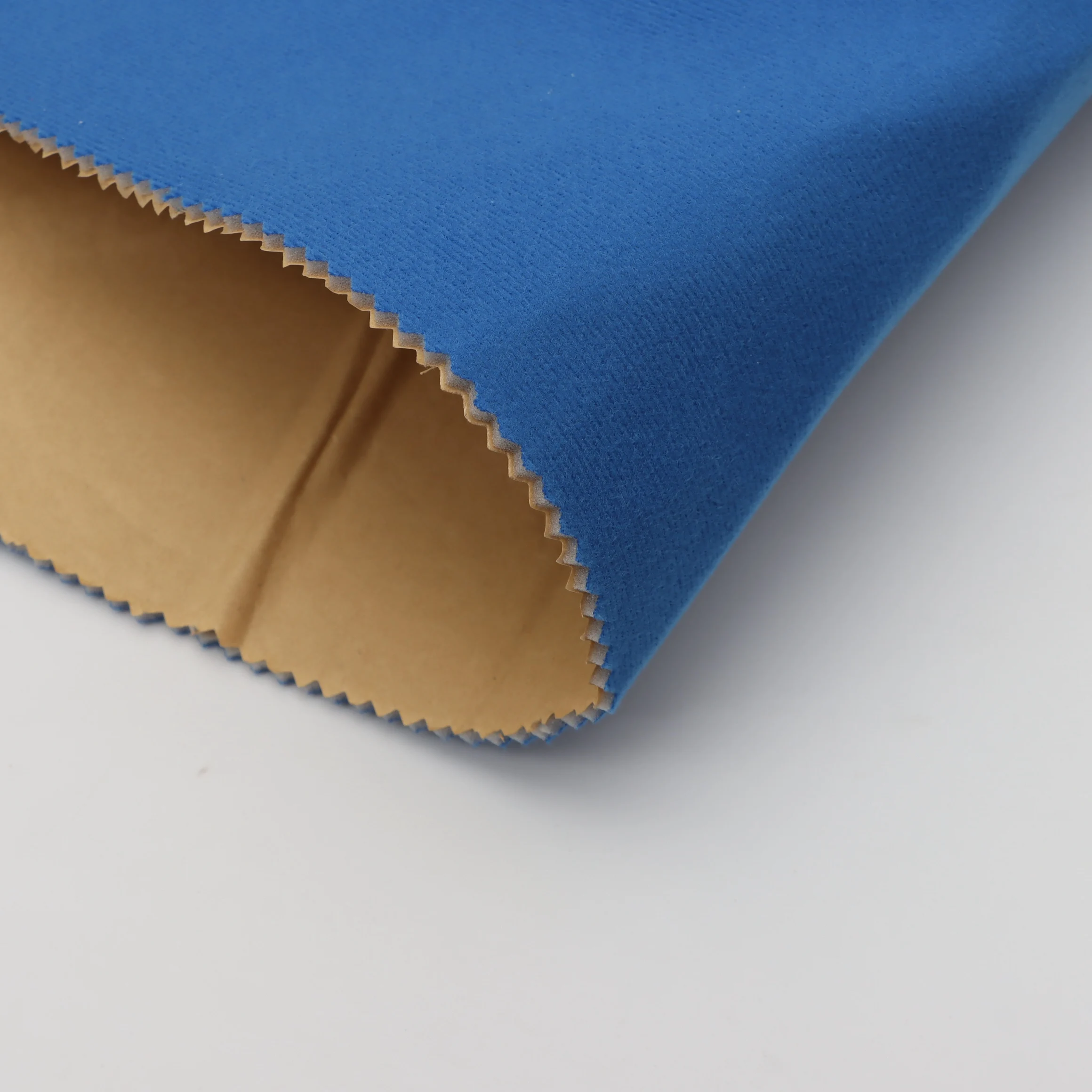
Loop Fabric + SBR Rubber
SBR rubber can add cushioning, elasticity, and structural support.
This structure is commonly used for:
Knee braces and waist supports
Wrist and ankle straps
Sports protection products
Rehabilitation support products
Adjustable protective parts
The choice between SBR should depend on the product function, hand feel, thickness, and budget.
A more expensive material is not always the better answer. The right match is what really matters.
Loop Fabric + CR Neoprene
When a product specifically requires neoprene, Before selecting the structure, it is better to consider flexibility, support level, durability requirement, use environment, and cost range.
Understanding what the product truly needs is more reliable than choosing a material only by name.
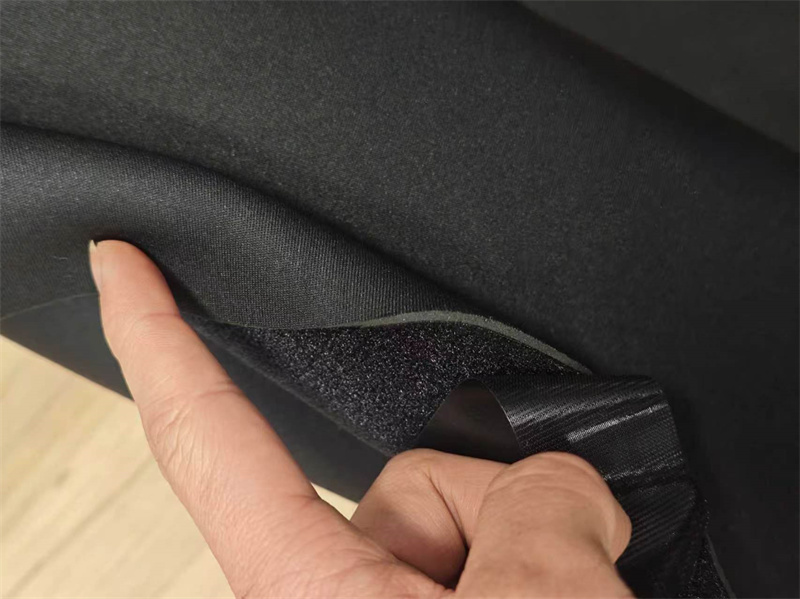
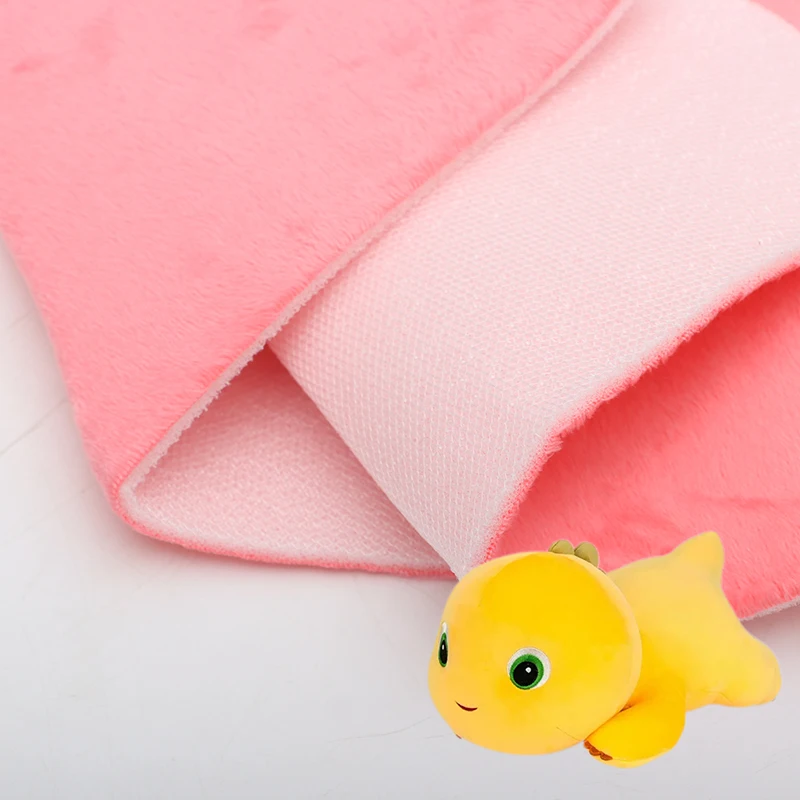
Loop Fabric + Foam + Backing Fabric
A three-layer laminated structure can combine several functions in one material.
Surface Loop Fabric: provides a hook-compatible surface
Middle Foam Layer: adds cushioning, thickness, and support
Backing Fabric: improves hand feel, appearance, and structural stability
Backing fabric options may include:
Knitted fabric
Brushed fabric
Tricot fabric
3D air mesh
Elastic fabric
Other customized textile materials
This structure is suitable for products that need surface fastening, internal cushioning, and a comfortable or stable backing layer at the same time.
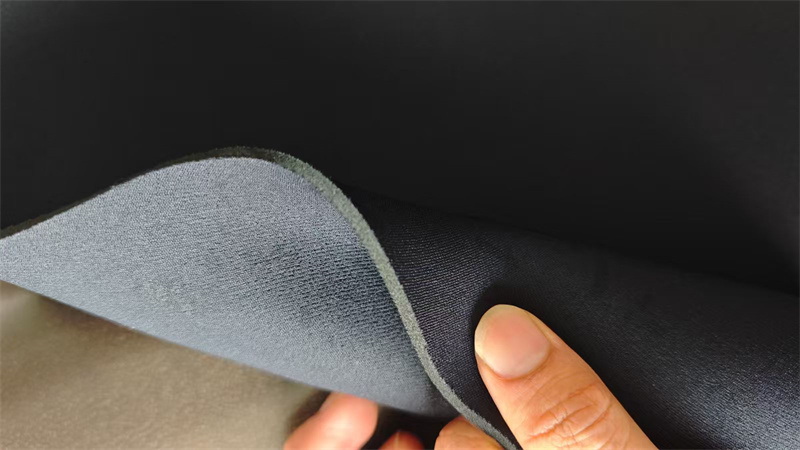
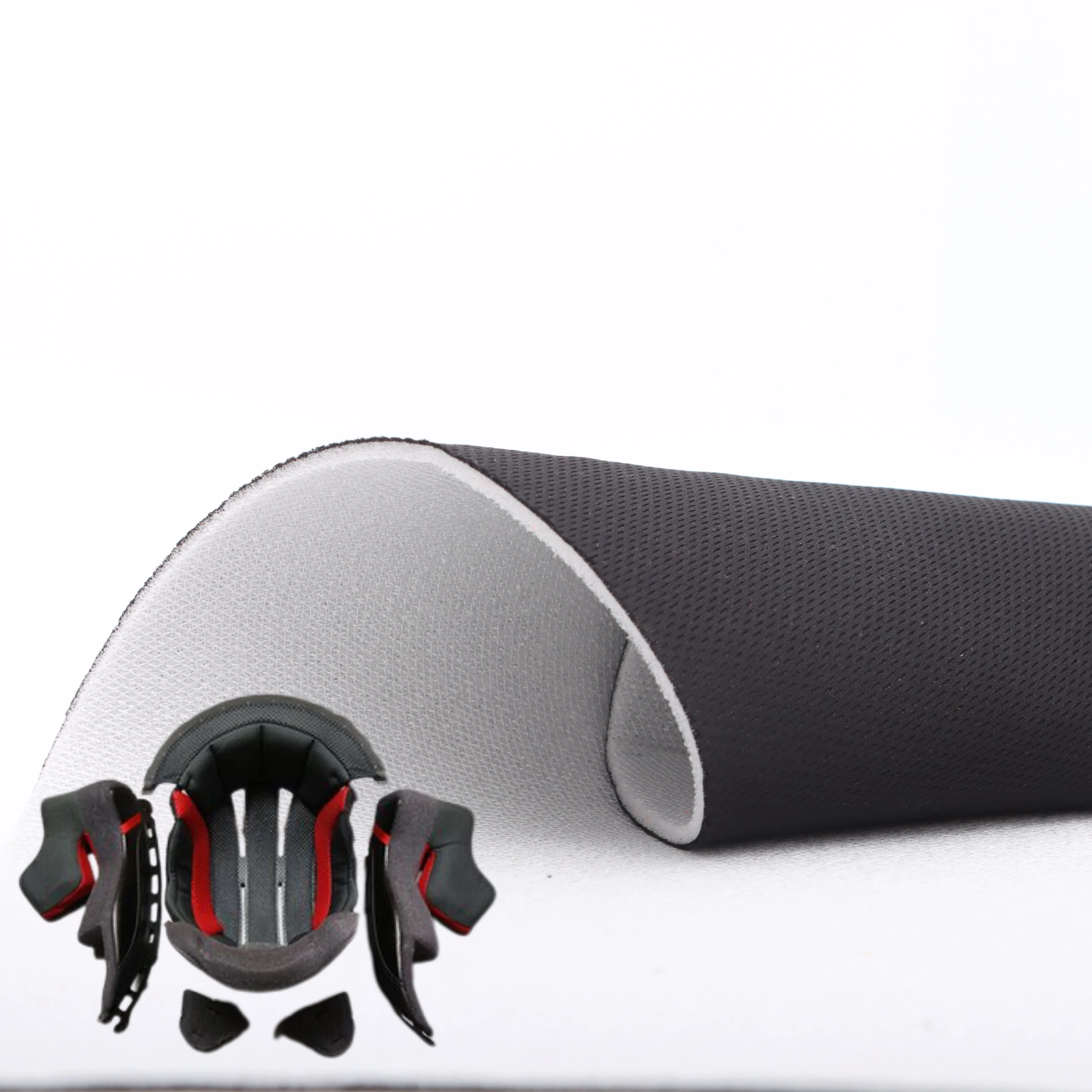
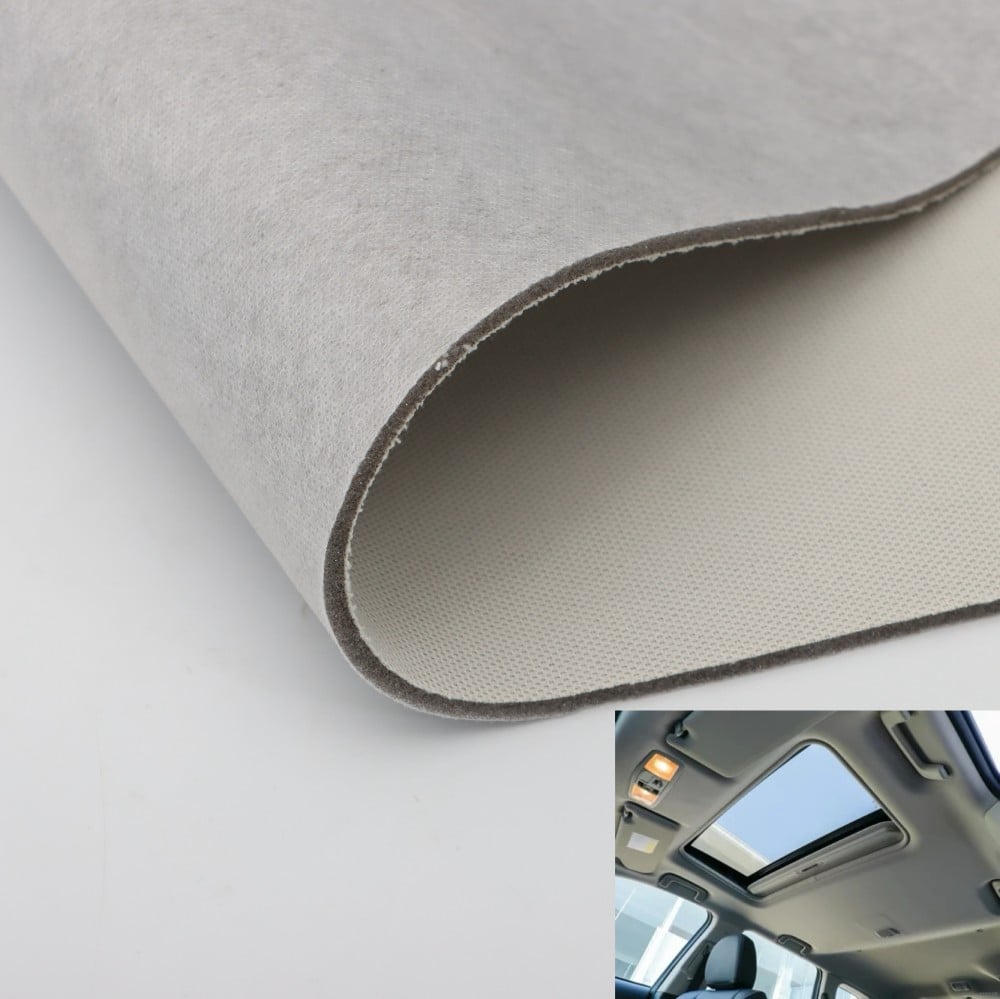
Loop Fabric + Air Mesh
When Loop Fabric is laminated with air mesh, the material can have a lighter appearance and a more structured textile surface.
This type of structure can be used for:
Sports support products
Shoulder straps
Protective pads
Bag components
Back support products
Wearable accessories
The final breathability does not depend only on the mesh itself. It can also be affected by foam thickness, adhesive coverage, and the complete laminated structure.
Custom Options Available
Loop Fabric can be customized according to the final product requirements.
Surface Options
Soft brushed surface
Fine knitted surface
Dense loop surface
Lightweight surface
Different softness and hand feel
Lamination Options
PU foam
SBR foam rubber
Knitted fabric
Brushed fabric
Air mesh
Elastic fabric
Specification Options
Color
Width
Thickness
Foam density
Roll length
Two-layer or three-layer structure
Sample development
Customization is not about making the structure more complicated.
The real goal is to combine the right surface, middle layer, and backing fabric for the final product.
A good material solution does not need to look complicated. It just needs to solve the product problem.
What Should Be Confirmed Before Choosing Loop Fabric?
To find a suitable Loop Fabric more efficiently, it is helpful to confirm the following details:
Final product and application
Preferred surface feel
Whether a large hook-compatible area is needed
Actual hook tape used in the product
Required thickness and support level
Middle layer and backing fabric
Color and width
Estimated quantity
Different hook tape structures and loop surfaces may show different peel performance, shear performance, and repeated opening results.
For this reason, testing the actual hook tape with the selected Loop Fabric before bulk production is always a safer choice than judging only from photos or material names.
Why Sample Testing Is Recommended
Loop Fabric cannot be fully evaluated by appearance alone.
Sample testing can help confirm:
Whether the loop surface is suitable
How it works with the actual hook tape
Foam thickness and density
Backing fabric hand feel and structure
Two-layer or three-layer lamination result
Surface condition after repeated opening and closing
This helps identify whether the material fits the final product before moving into bulk production.
A few sample tests at the beginning can save a lot of trouble later. Tiny tests, big peace of mind.
Find the Loop Fabric That Truly Fits Your Product
Loop Fabric can be used in many different products, but there is no single material that works for every application.
Braces need softness and support. Straps need adjustment space. Bags need cushioning and structure. Footwear and garments need flexibility and a clean appearance.
So the better approach is simple:
Start with the application.
Then choose the surface, thickness, and laminated structure.
Finally, test before bulk production.
Shanghai Dongyao Shoes Material Co., Ltd., established in 2002 near Shanghai Port, is a leading laminated fabric manufacturer. We specialize in high-quality composite fabrics serving medical, automotive, sports protection, and luggage industries with reliable export logistics and innovation.
 EN
EN