EN
EN



A Quick Introduction
At first glance, foam may look simple.
But PU Foam (Polyurethane Foam) is actually one of the most widely used — and most misunderstood — materials in modern products.
It can be:
☁️ soft or supportive
⚖️ light or dense
comfortable or protective
simple or highly functional
That is why PU Foam appears in furniture, bedding, footwear, packaging, automotive interiors, medical support products, sports gear, and protective cases.
① What Is PU Foam?
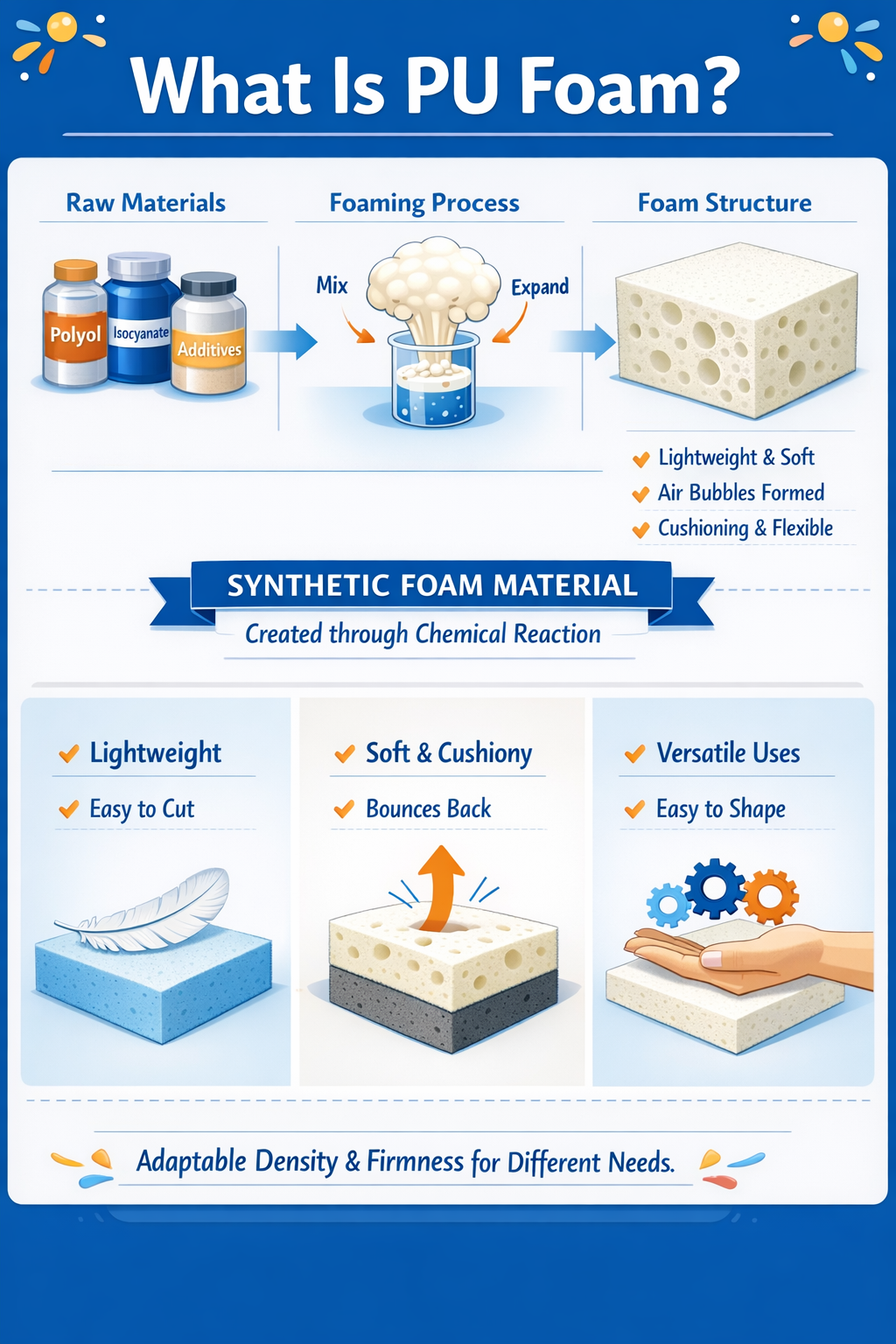
A synthetic foam material with a flexible internal structure
PU Foam stands for Polyurethane Foam.
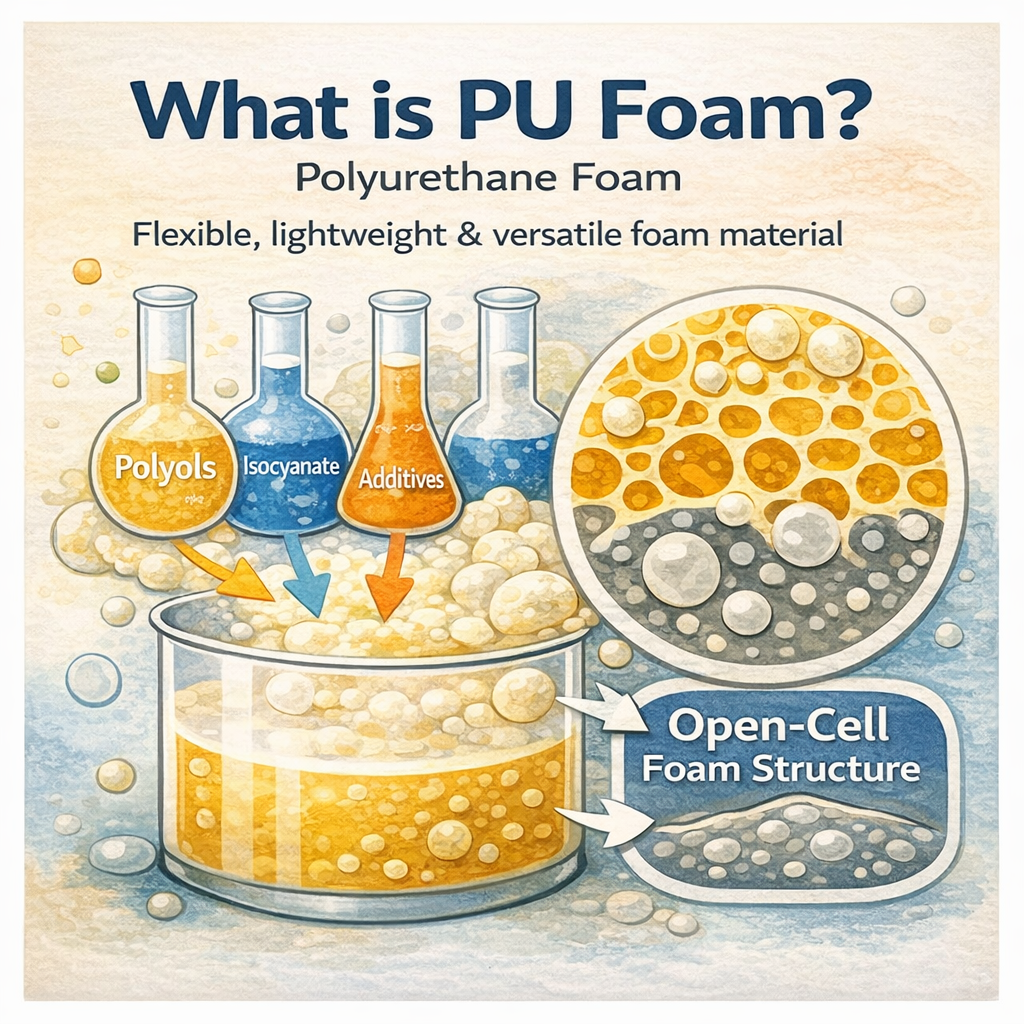
It is a synthetic polymer foam created through a chemical foaming reaction.
Instead of being completely solid, it forms a cellular structure inside.
Those tiny internal cells are exactly what give PU Foam its most useful characteristics:
- ☁️ lightweight feel
- cushioning performance
- flexibility
- rebound
- ✂️ easy processing
In simple words, PU Foam is not just "soft sponge."
It is a configurable material system that can be adjusted through formulation, density, firmness, cell structure, and processing.
② Why Does PU Foam Have Pores and Air Cells?
The "holes" are part of the function, not necessarily a flaw
PU Foam is called foam for a reason.
During production, the material develops internal cells through the foaming process.
These cells are important because they help determine:
softness
⚖️ weight
rebound
breathability
support feel
structural consistency
In general:
- larger cells may feel lighter and softer
- smaller cells often feel finer and more even
- uniform cells usually mean more stable performance
- irregular cells may affect appearance, rebound, and durability
So when you see pores in foam, the better question is not:
"Does it have holes?"
The better question is:
What kind of cell structure does it have, and is it suitable for the application?
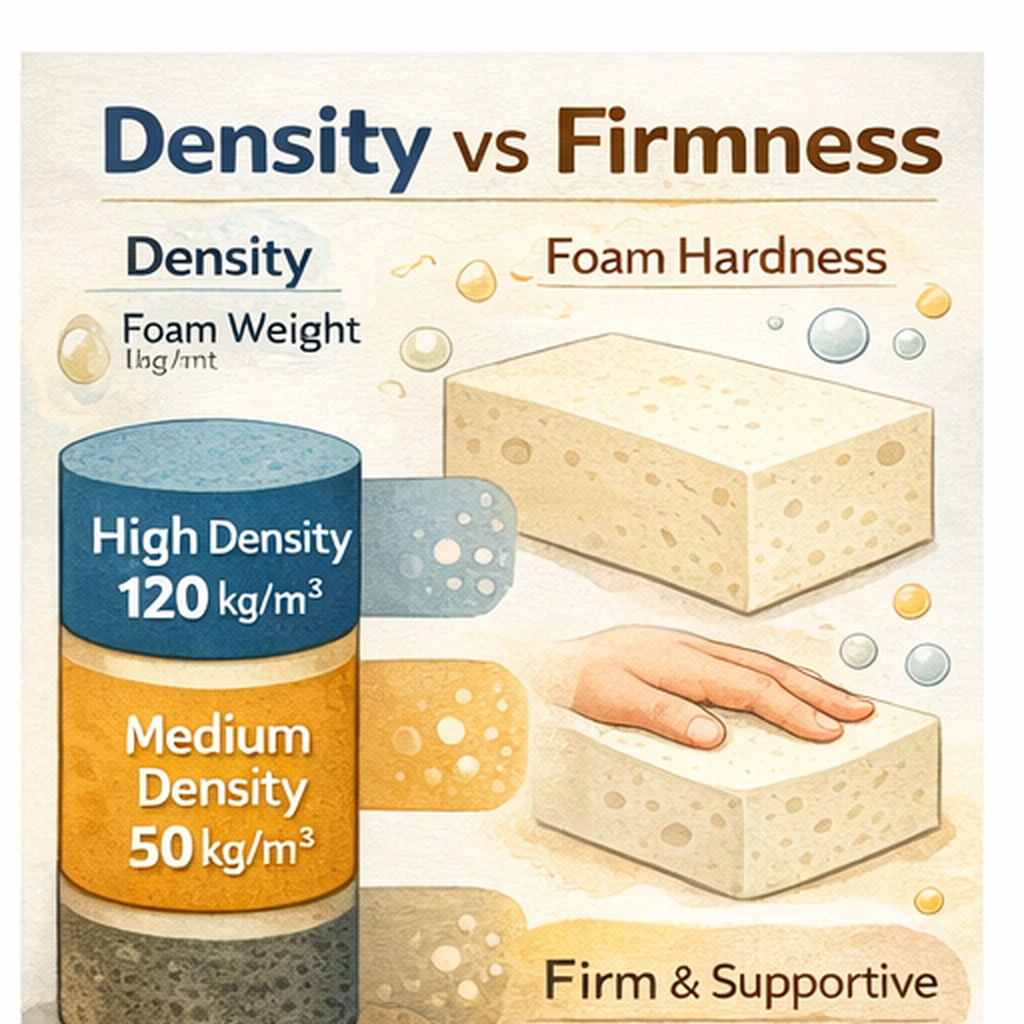
③ Density vs. Firmness
Two different concepts that buyers often confuse
This is one of the most important parts of foam selection.
⚖️ Density
Density refers to how much material is packed into a given volume.
It is related to:
- weight
- structural fullness
- durability potential
- general support stability
Firmness
Firmness describes how soft or hard the foam feels when pressed.
It is related to:
- touch
- compression feel
- support sensation
- comfort perception
The key difference
A foam can be:
- high density but still soft
- lower density but feel firmer
That is why density is not the same as firmness.
Easy way to remember
Density = how much material is inside
Firmness = how it feels when compressed
④ What Types of PU Foam Are There?
Different foam types for different needs
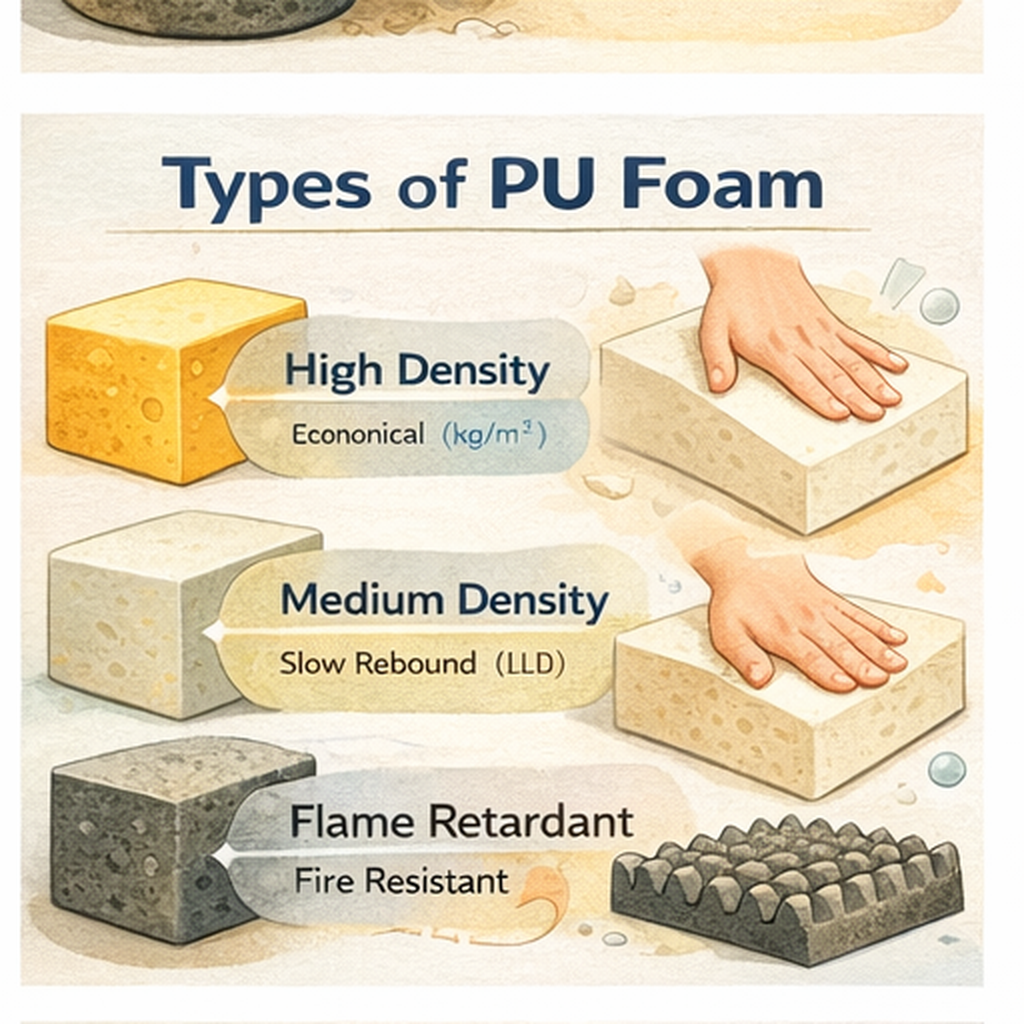
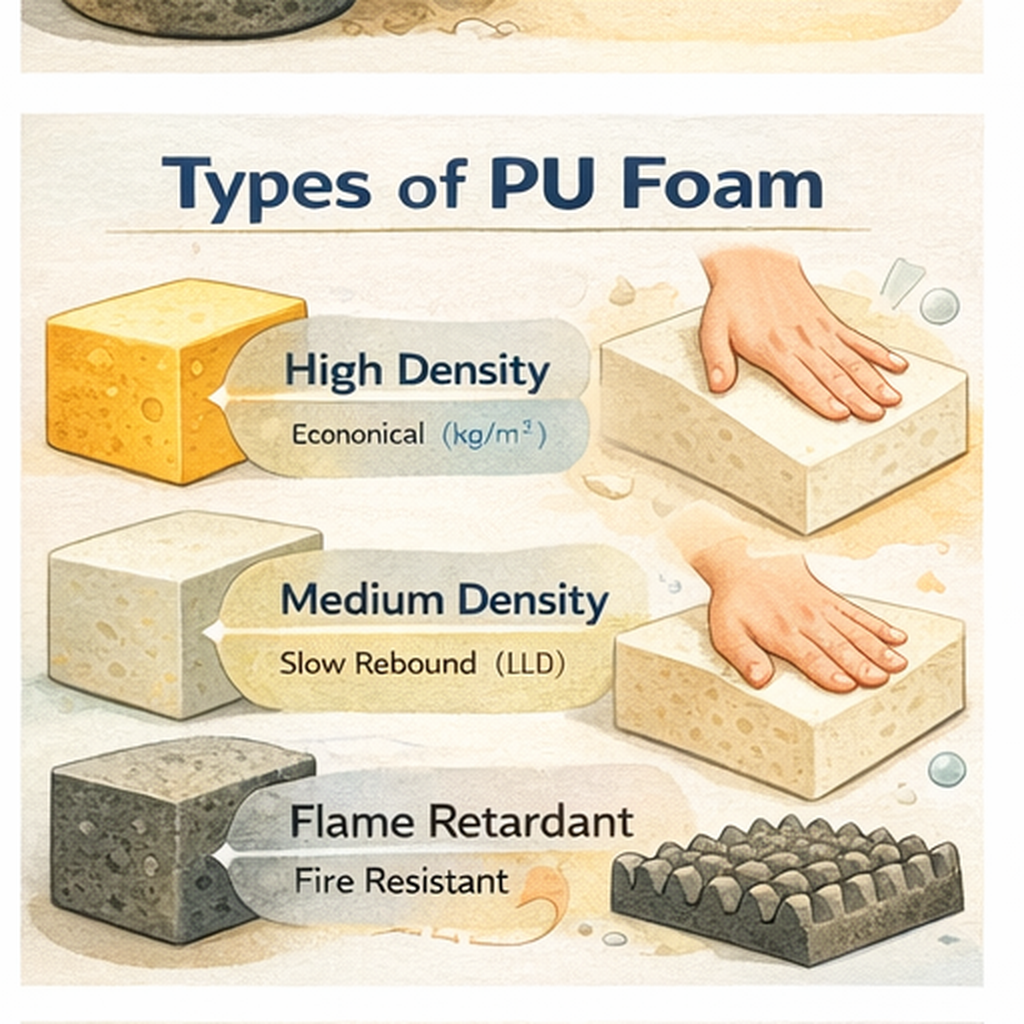
PU Foam is not just one single category.
Several common types are used depending on the performance required.
✨ Standard Foam
A general-purpose foam with broad use and good cost efficiency.
✨ High Resilience Foam
Offers faster rebound and stronger support.
Common in seating, cushions, and support applications.
✨ Memory Foam
A slow-rebound foam designed for contouring comfort and pressure distribution.
✨ Flame Retardant Foam
Used when improved flame resistance is required.
✨ Acoustic Foam
Designed for sound absorption and noise control.
✨ Packaging Foam
Used for cushioning, impact protection, and product security.
⑤ What Is Memory Foam?
Still PU Foam — but designed for slow rebound and pressure relief
Memory Foam is not a completely separate material family.
It is actually a special type of PU Foam with a slower rebound profile.
Its main characteristics include:
slow recovery after compression
contouring support
pressure distribution
comfort-oriented feel
That is why it is commonly used in:
- pillows
- mattresses
- seat cushions
- neck supports
- medical support pads
At the same time, it also has some limitations:
- it may feel warmer
- it may become firmer in colder temperatures
- it is not ideal for every high-movement application
- it usually costs more than standard foam
So memory foam is not simply "better."
It is just better for certain comfort-focused applications.
⑥ White, Grey, and Black Foam
Color affects appearance and application preference — not quality by itself
Foam color often creates strong visual assumptions.
People may think:
white looks cleaner or more premium
grey looks neutral or industrial
black looks stronger or more durable
But in reality, color alone does not define material quality.
White Foam
Often associated with:
- bedding
- home products
- visible packaging interiors
- cleaner visual presentation
Grey Foam
Often associated with:
- industrial cushioning
- support products
- footwear components
- liners and inserts
Black Foam
Often associated with:
- protective cases
- sports gear
- electronic inserts
- bag linings
- industrial protection parts
Color can be influenced by:
pigments
fillers
⚙️ formulation direction
♻️ recycled content tendency
visual design preference
✨ Cute but important reminder
Color = visual clue
Color ≠ direct proof of quality
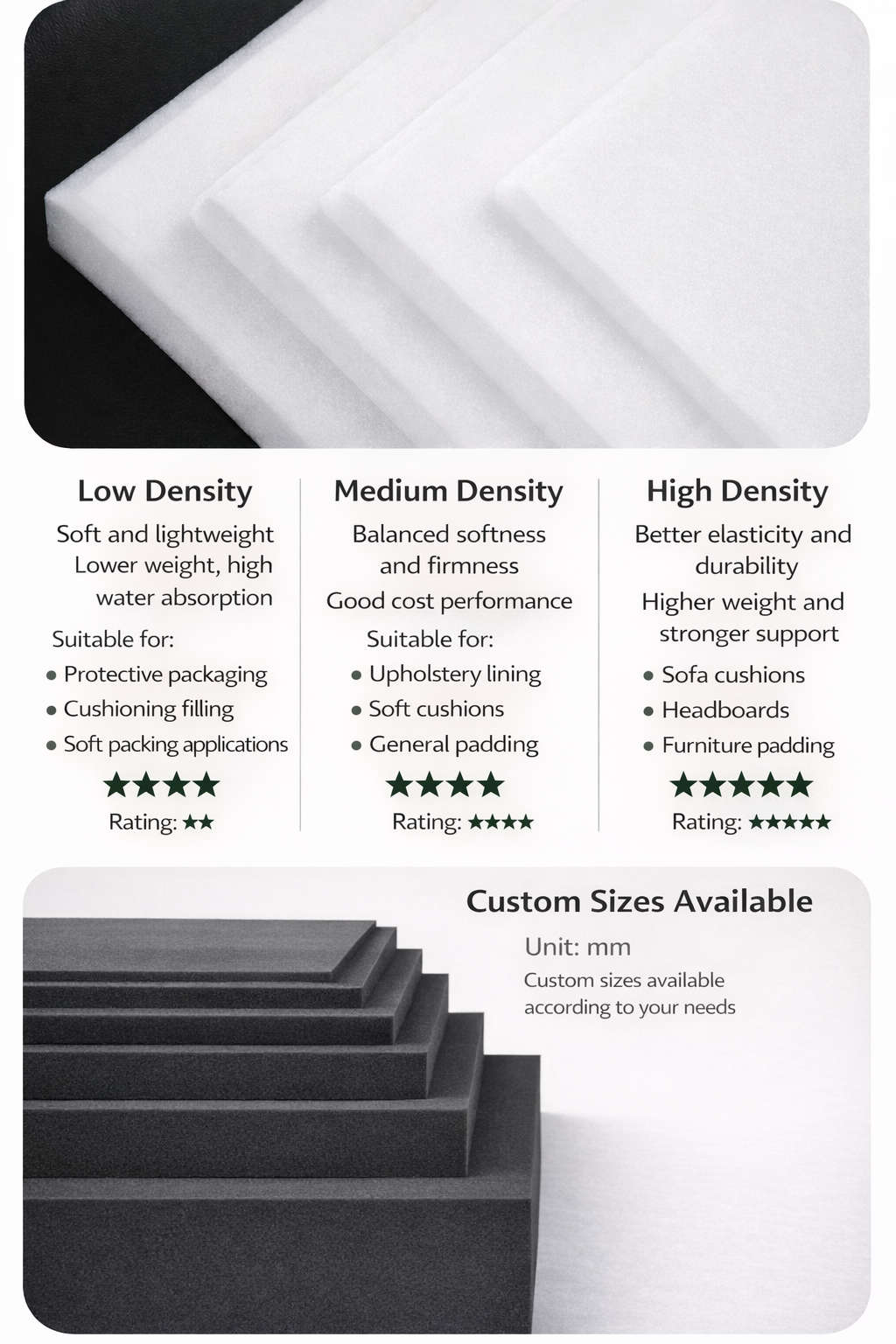
⑦ Why Do Some Foams Cost More Than Others?
Similar appearance, very different cost logic
This is one of the most practical questions in sourcing:
Why do similar-looking foams have very different prices?
The answer is usually a combination of factors:
- better raw material grade
- ⚖️ higher density
- special firmness targets
- memory foam or high resilience formulation
- flame retardant or functional additives
- lower VOC or stricter environmental requirements
- ✂️ extra cutting, shaping, lamination, or finishing
- tighter visual or dimensional control
Lower-cost foam is often linked to:
- simpler raw material systems
- lower density
- fewer performance requirements
- simpler production routes
- standard large-volume manufacturing
So thickness alone is never enough to explain cost.
⑧ Key Properties of PU Foam ✨
Why it works across so many industries
PU Foam is widely used because it offers a valuable balance of properties.
Typical advantages
- ☁️ lightweight
- cushioning
- flexibility
- rebound
- ✂️ easy shaping and processing
- broad formulation range
- compatibility with many products
⚠️ Common limitations
- some foams may yellow over time
- some may lose performance under long-term compression
- UV and heat resistance vary by formulation
- odor level depends on formulation and curing quality
- standard PU Foam is not automatically flame retardant
This is why foam should always be selected based on actual end use, not just appearance.
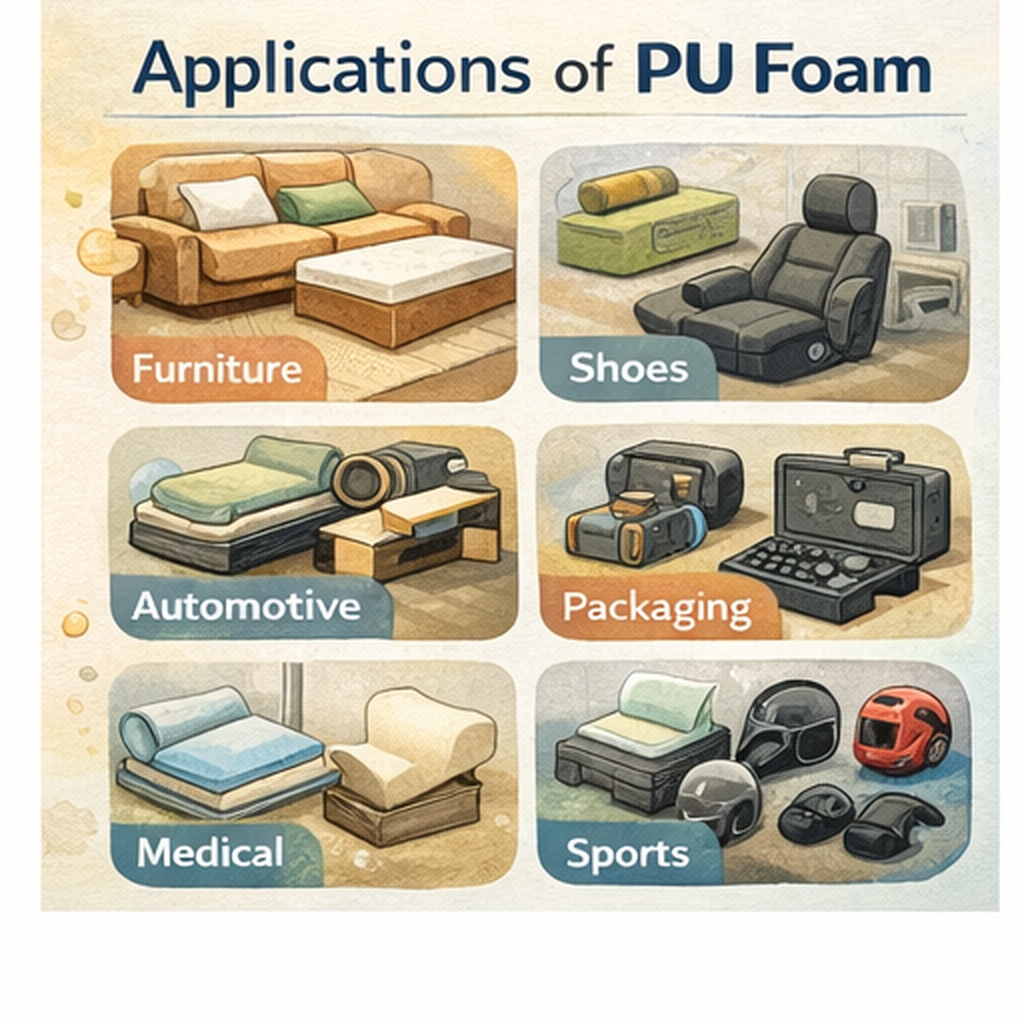
⑨ Where Is PU Foam Used?
A material that appears across both daily life and industrial products
PU Foam is used in a surprisingly wide range of products.
Furniture & Bedding
- sofas
- mattresses
- back cushions
- support pads
Footwear & Wearables
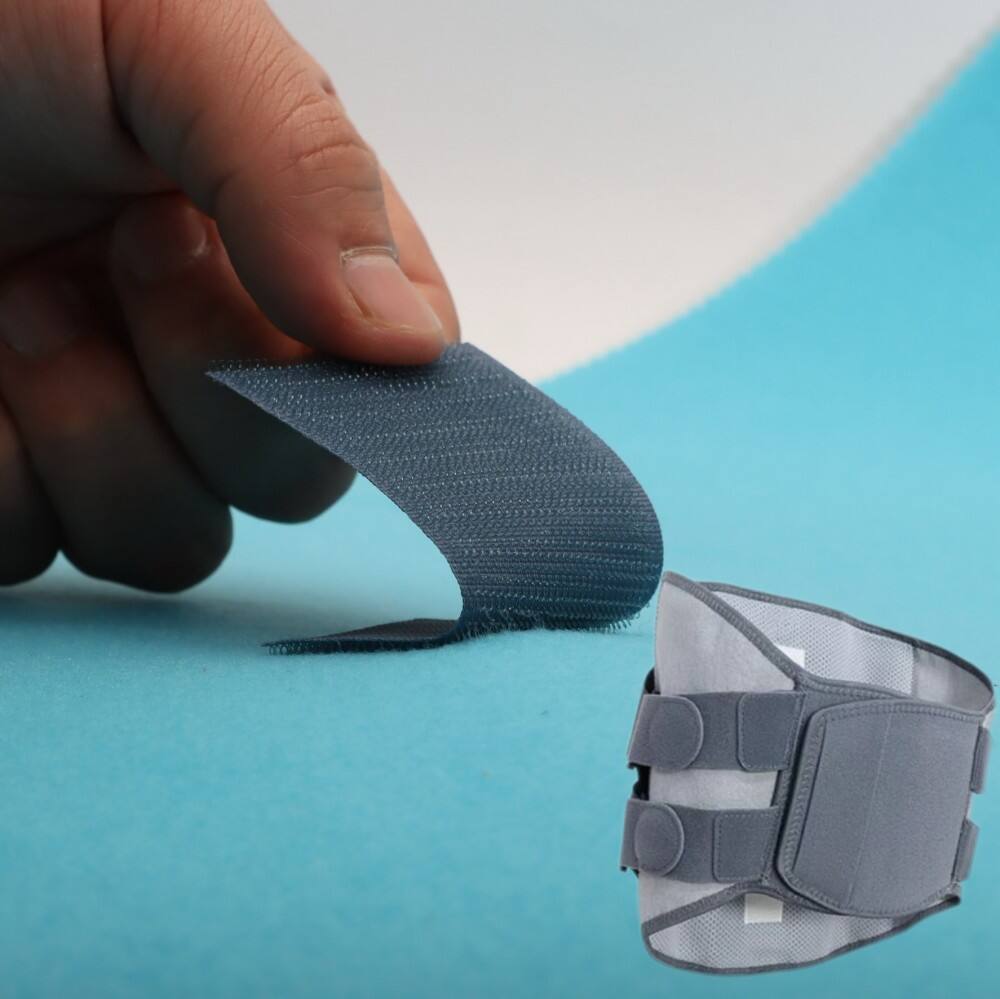
- insoles
- bra cups
- wearable support inserts
- padding layers
Packaging & Protection
- case inserts
- anti-shock packaging
- equipment protection pads
- tool case lining
Automotive & Industrial
- seat filling
- headrests
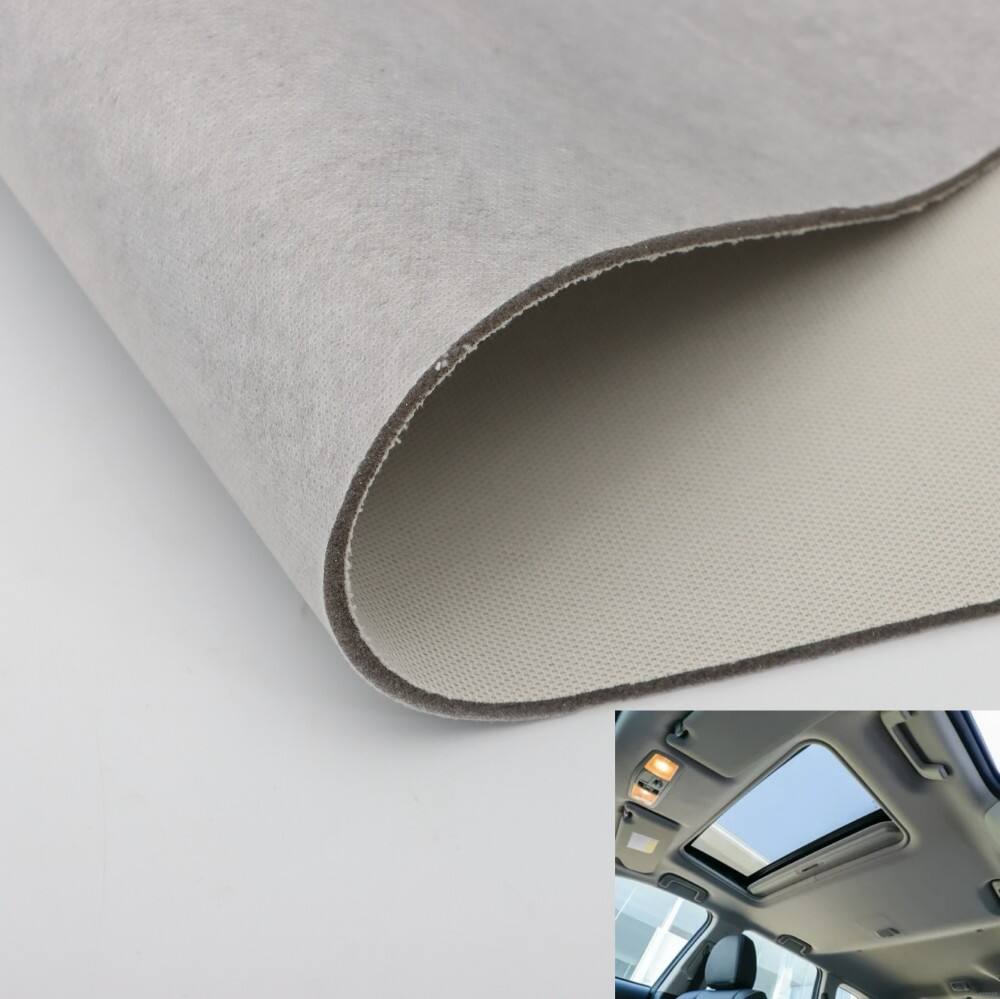
- liner materials
- cushioning and acoustic components
Medical & Care
- posture pads
- support cushions
- care mattresses
- pressure management products
Sports & Outdoor
- protective gear
- padding components
- support accessories
- impact protection layers
⑩ What Should Buyers Ask When Sourcing PU Foam?
Asking the right questions saves time and improves selection
If you are sourcing PU Foam, it helps to confirm these points first:
- What product is it for?
- What thickness is needed?
- Should it feel soft or firm?
- What density range is required?
- Does it need high resilience or memory foam?
- Does it need flame retardancy?
- Will it be used near skin?
- Are environmental requirements important?
- Does it need lamination or fabric bonding?
- Will it face long-term compression or repeated use?
The clearer these details are, the easier it becomes to recommend the right foam.
✅ Final Takeaway
PU Foam is not just "a sponge" — it is a configurable material system
Foams that look similar can still differ greatly in:
✨ formulation
✨ density
✨ firmness
✨ cell structure
✨ rebound behavior
✨ durability
✨ processing
✨ cost
✨ final application suitability
That is why a better sourcing question is not simply:
"How much does this foam cost?"
A better question is:
- What type of PU Foam is this?
- What is the density?
- What is the firmness?
- Is it standard, high resilience, or memory foam?
- Does it have special functions?
- Is it suitable for my final product?
When those answers are clear, buyers make better decisions — and material recommendations become much more accurate